Stop Fragmented AI Projects! Learn the Step-by-Step Strategy to Coordinate, Scale, and Democratize AI Across Your Entire Organization
Prof. Aécio D’Silva, Ph.D
AquaUniversity
Your AI Projects Are Failing to Scale. Here’s Why.
Your company is investing heavily in Artificial Intelligence—pilots are launching, data scientists are busy, and excitement is high. Yet, you notice a troubling pattern: solutions developed in one department don’t help another, standards are inconsistent, and projects often stall before they deliver real, company-wide value. You are suffering from Fragmented AI Syndrome. The antidote isn’t more software; it’s a dedicated, centralized leadership structure: the AI Center of Total Excellence Leadership-Management (AI-CTE). This isn’t just an IT department—it’s the strategic engine that ensures every AI initiative drives maximum value, ethical integrity, and total excellence across your business.
Category: AI and Fish Farming

Deterministic vs. Probabilistic AI: Choosing the Right Model for the Job
The Predictable and the Probable
Prof. Aécio D’Silva, Ph.D
AquaUniversity
Introduction:
Deterministic vs. Probabilistic AI – Have you ever wondered why a simple calculator always gives you the same answer for “2 + 2” (it’s always 4!). At the same time, a weather forecast tells you there’s a “70% chance of rain” today? This simple difference perfectly illustrates the core concepts behind deterministic and probabilistic AI models. In the world of artificial intelligence, these are two fundamental approaches to how systems make decisions and predictions. Neither is inherently superior; the best choice profoundly depends on the specific problem you’re trying to solve, the data you have, and your desired outcomes. Let’s dive in and unravel when to use which!

Building AI Intelligent Agents the No-Code Way
Unleash Your Inner AI Architect
Prof. Aécio D’Silva, Ph.D
AquaUniversity
Okay, let’s embark on an exciting journey to build intelligent AI agents without writing a single line of code! Get ready to unlock the power of artificial intelligence using simple visual tools.
Imagine having a digital assistant that can learn, automate tasks, and even create content – all without you needing to be a coding wizard. That’s the magic of no-code AI intelligent agents. This guide will show you, step-by-step, how to bring these powerful tools to life using intuitive visual interfaces.

The Potential and Challenges of Applying Human-AI Collaborative Intelligence
How Humans and Machines Can Work Together To Solve Complex Problems and Create Value
Prof. Aécio D’Silva, Ph.D
In many of my collaborative intelligence leadership publications, I’ve underscored the benefits of collaborative intelligence as a pathway to attaining total excellence. Beginning with the truth that “we” collectively possess greater intelligence than “I” alone. Presently, we’re faced with a more intricate and demanding task: exploring the potential and hurdles of human-AI collaboration in practical settings. Human and AI collaborative intelligence is the idea that humans and artificial intelligence (AI) systems can combine their strengths and capabilities to achieve better outcomes than either could alone. It is based on the premise that humans and machines have complementary skills and abilities and that by working together, they can enhance each other’s performance and learning. In this blog post, we will explore what human and AI collaborative intelligence is, how it works, and what are some of the potential benefits and challenges of this approach.
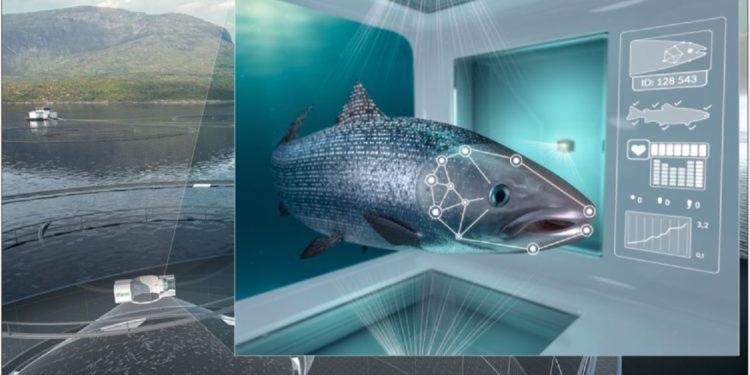
AI Revolutionizing Fish Farming Production
The Role of AI in Improving Fish Farming Production
By Aécio D’Silva, PhD
AI and Fish Farming – Fish farming is a crucial part of the food industry and plays a vital role in providing sustainable seafood to meet the demands of the growing population. However, fish farming production has been facing several challenges, including unpredictable weather patterns, disease outbreaks, and water quality management. Artificial Intelligence (AI) is becoming increasingly important in revolutionizing fish farming production, addressing these challenges, and improving the overall efficiency and profitability of the industry.
BOOKS BY PROF. AECIO D’SILVA ON AMAZON; AN INTRODUCTION TO THE USE OF ALGAE FOR INTELLIGENT SUSTAINABLE PRODUCTION OF FUEL, FEED, CHEMICALS AND PHARMACEUTICALS

BOOKS BY PROF. AECIO D’SILVA ON AMAZON – RESILIENT LAQL WAY MANAGEMENT: Collaborative Intelligence, Customer First, Respect to People, Toxic-Free Workplace, Continuous Improvement, Sustainability (English Version)
BOOKS BY PROF. AECIO D’SILVA ON AMAZON – GESTÃO-LIDERANÇA ICET WAY – INTELIGÊNCIA COLABORATIVA & EXCELÊNCIA TOTAL (Portuguese Version)