Complete Guide for Data Centers, Renewable Energy, and Critical Infrastructure
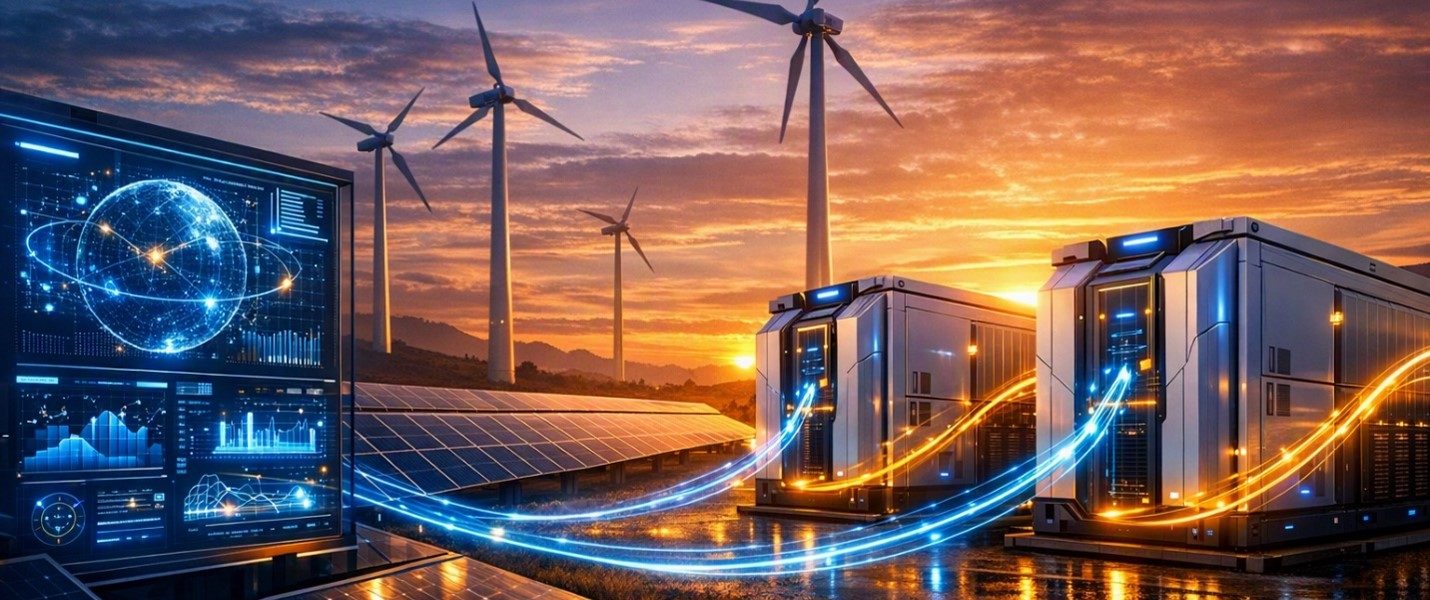
BESS integrated with AI-TES for Renewable Energy, Data Centers, and Critical Infrastructure
**Prof. Aecio D’Silva, Ph.D.
Learn how AI-TES-managed battery energy storage systems improve reliability, integrate renewables, support AI data centers, and strengthen critical infrastructure.
Primary keywords: AI-TES-managed BESS, battery energy storage systems, BESS for data centers, renewable energy storage, critical digital infrastructure, intelligent energy storage, AI energy management, microgrids, energy reliability.
Executive Summary for Fast Readers
AI-TES-managed BESS is becoming a strategic layer for renewable energy assets, AI data centers, and mission-critical digital infrastructure. By combining batteries, PCS, BMS, EMS, predictive analytics, automation, and Total Excellence Management, organizations can store clean energy, respond to highly variable loads, reduce demand peaks, preserve contingency reserves, improve power quality, and strengthen operational resilience.
- For executives: AI-TES-managed BESS turns energy reliability into a competitive advantage by reducing risk, cost, and emissions.
- For operators: AI-TES-managed BESS improves stability, availability, event response, and integration with UPS, SCADA, EMS, BMS, and DCIM.
- For investors: storage increases the value of renewable assets, reduces curtailment, and enables more predictable energy contracts.
- For data centers: AI-TES-managed BESS helps support GPU clusters, cooling systems, and critical workloads with greater energy control.
Why AI-TES-Managed BESS Matters
The energy transition is no longer only about generating clean power. The new challenge is delivering clean, stable, and available energy exactly when critical operations need it. Solar and wind assets generate electricity with natural variability, while AI factories, high-density data centers, telecommunications networks, hospitals, automated industrial sites, and digital platforms require near-continuous availability and fast response to load fluctuations.
Battery Energy Storage Systems, or BESS, are no longer just large batteries. They act as an intelligent layer between generation, the grid, and mission-critical consumption. When combined with artificial intelligence, advanced automation, sensors, grid-forming inverters, and Total Excellence Management, BESS becomes a strategic asset for reliability, sustainability, cost optimization, and business continuity.
How High-Tech BESS with AI-TES Works
A modern BESS integrates AI-TES-managed battery modules, power conversion systems, inverters, thermal control, protection systems, monitoring software, AI optimization algorithms, and Total Excellence Systems. Its basic function is to charge intelligently when energy is available, cleaner, or cheaper and discharge when demand, grid instability, price peaks, or backup requirements arise.
The high-tech differentiator is embedded Total Excellence and intelligence. Instead of relying only on fixed rules, AI analyzes real-time and forecast data to decide when to store energy, when to release it, how to protect battery health, and how to support electrical stability. Inputs may include weather forecasts, renewable generation curves, electricity prices, state of charge, battery temperature, cell degradation, data center demand, grid constraints, and the priority level of critical loads.
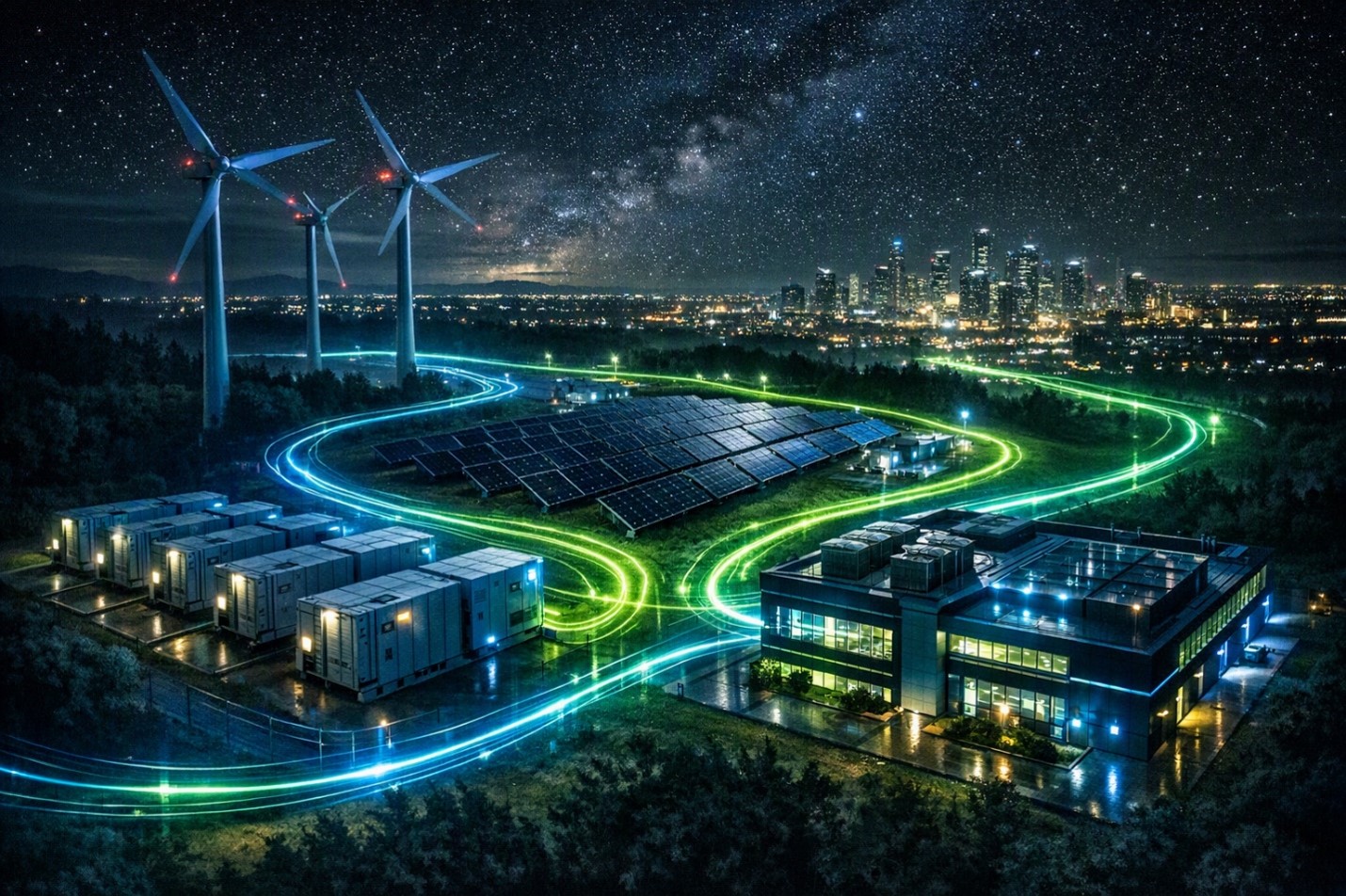
BESS-AI-TES for Solar and Wind Parks
Solar energy is abundant during the day but drops quickly in the evening, often when demand rises. Wind power can vary over minutes or hours. Without storage, clean energy may be curtailed, sold at low value, or unavailable when critical loads need it most. BESS helps transform variable renewable generation into more dispatchable and reliable energy.
In renewable parks, AI-TES-managed BESS can smooth fluctuations, reduce curtailment, improve power quality, support frequency and voltage, provide operating reserves, and bridge the gap between intermittent production and real demand. For investors and operators, this means more predictable revenue, better asset utilization, lower exposure to negative prices or tariff spikes, and stronger 24/7 clean energy contracts.
AI-TES-managed BESS for AI Data Centers and AI Factories
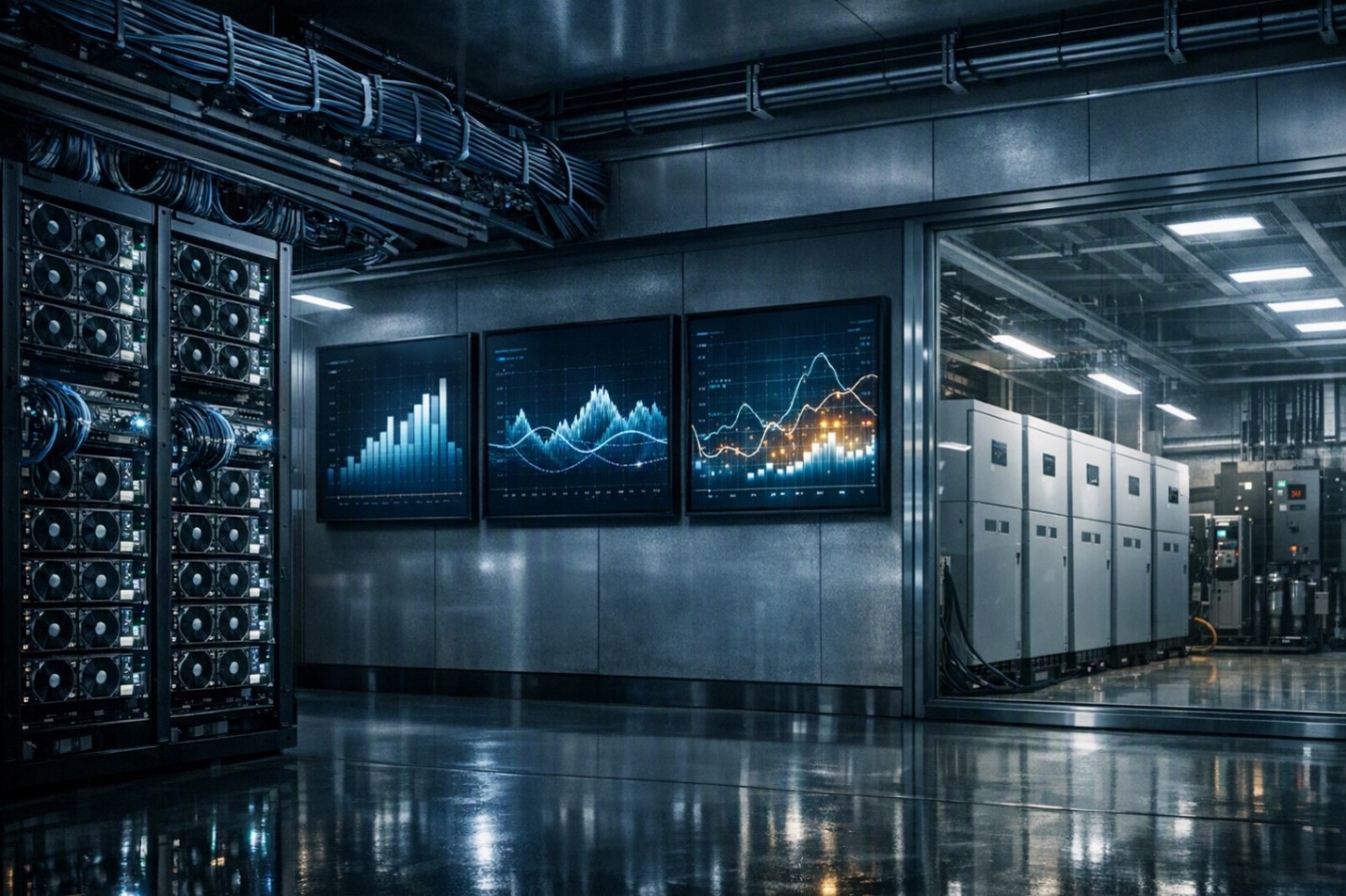
Critical digital infrastructure behaves differently from traditional electricity consumers. AI factories and high-density data centers may experience fast, repeated, and intense load ramps driven by model training, large-scale inference, GPU clusters, cooling systems, and network equipment. Even small power quality deviations can disrupt processes, degrade equipment, or affect essential digital services.
AI-TES-managed BESS acts as an intelligent, total excellence energy buffer. It absorbs surplus energy, delivers power within milliseconds or seconds, reduces demand peaks, and helps keep voltage and frequency within operational limits. Together with UPS systems, generators, microgrids, and on-site renewables, AI-TES-BESS creates a more flexible energy architecture that reduces exclusive dependence on the grid and limits unnecessary fossil backup activation.
AI Optimization: Charging, Discharging, and Reliability
AI-TES turns BESS into more than a backup asset. It enables predictive and adaptive operation. Algorithms can forecast solar and wind generation, predict consumption peaks, identify battery degradation patterns, calculate optimal charge and discharge strategies, and prioritize energy for the most critical systems. Instead of reacting to problems, the platform helps prevent them.
In practice, AI supports operational decisions such as whether to charge now or wait for a lower price, whether to preserve energy for a possible grid failure, how much energy can be discharged without accelerating battery degradation, and which combination of solar, wind, grid, BESS, and backup sources minimizes cost and risk.
Total Excellence Management for BESS and Critical Infrastructure
Technology alone does not guarantee excellence. Total Excellence Management applied to BESS and critical digital infrastructure means standardizing processes, measuring performance, reducing variability, addressing root causes, training teams, and enabling continuous improvement. The goal is to operate with safety, availability, efficiency, and traceability.
Key indicators such as availability, mean time between failures, mean time to repair, round-trip efficiency, battery state of health, event response, thermal incidents, electrical losses, avoided emissions, and cost per delivered megawatt-hour should be monitored through executive and operational dashboards. Excellence comes from integrating people, processes, technology, and governance.
Essential KPIs for AI-TES Managed BESS in Data Centers
In data centers, AI-TES BESS KPIs must connect electrical engineering, mission-critical operations, financial performance, and governance. The goal is not only to know whether the battery worked, but whether it delivered power at the right time, preserved asset life, reduced operational risk, and improved power quality for IT loads, cooling systems, UPS, distribution panels, and building automation systems.
- BESS availability: percentage of time the system is ready to operate.
- SOC — State of Charge: real-time stored energy available for use or contingency.
- SOH — State of Health: battery condition compared with nominal capacity and degradation.
- RTE — Round-Trip Efficiency: ratio between energy discharged and energy charged.
- Response time: how fast BESS delivers power after a command or grid event.
- Dispatch accuracy: difference between the requested power and the delivered power.
- Power quality events mitigated: sags, swells, flicker, harmonics, frequency deviations, and transients.
- Peak shaving savings: cost reduction from lowering maximum demand and tariff exposure.
- Renewable energy utilized: clean energy is stored instead of being curtailed or sold at low value.
- Critical alarm rate and false positives: quality of monitoring, sensing, and predictive models.

Security, Governance, and Cyber-Resilience
Because AI-TES-managed BESS becomes part of the energy core of critical operations, physical safety, electrical safety, and cybersecurity must be addressed from the design stage. This includes network segmentation, access control, continuous monitoring, firmware updates, incident response testing, thermal propagation protection, emergency planning, and clear governance rules for who can change operating parameters.
In mission-critical environments, AI must be explainable, monitored, supervised, and TES managed. Automation should operate under clear policies for normal mode, contingency mode, islanding, recovery, and maintenance. This allows the system to gain speed without losing control.
Conclusion: Intelligent AI-TES-managed BESS Turns Energy into Competitive Advantage
The critical infrastructure of the future will be judged by three capabilities: keeping energy available in real time, adapting to highly variable loads, and operating with lower environmental impact. AI-TES-managed BESS moves beyond backup and becomes a strategic layer of energy flexibility, operational intelligence, and resilience. It connects renewable generation, the grid, UPS, microgrids, data centers, and industrial systems into an architecture capable of responding with speed, precision, and governance.
Call to Action
If your organization operates data centers, AI factories, renewable parks, or critical digital infrastructure, the next step is to move from concept to diagnosis. Map your critical loads, demand ramps, energy risks, peak shaving opportunities, renewable integration potential, autonomy requirements, and the maturity of EMS, BMS, SCADA, DCIM, and UPS systems. Then build a roadmap to evaluate, size, and operate AI-TES-managed BESS under Total Excellence Management.
References
- D’Silva, A. (2026). Sodium BESS: Scalable Energy for AI Factories. Moura Enterprises Labs. US. https://algaeforbiofuels.com/sodium-bess-scalable-energy-for-ai-factories/
- D’Silva, A. (2026). Artificial Intelligence and Total Excellence Management. Moura Enterprises Labs. US. https://algaeforbiofuels.com/artificial-intelligence-and-total-excellence-management/
- Baggu, M., Smith, K., Friedl, A., Bialek, T., & Schimpe, M. (2017). Performance and health test procedure for grid energy storage systems. IEEE Power & Energy Society General Meeting. https://doi.org/10.1109/PESGM.2017.8274326
- International Energy Agency. (2024). Batteries and secure energy transitions. IEA.
- IEEE Standards Association. (2019). IEEE guide for design, operation, and maintenance of battery energy storage systems (IEEE Std 2030.2.1-2019). IEEE.
- Walker, A., & Desai, J. (2023). Battery energy storage system evaluation method (DOE/GO-102023-6083). U.S. Department of Energy; National Renewable Energy Laboratory.
- Pacific Northwest National Laboratory. (2024). Energy storage cost and performance database. PNNL.
In Belo Jardim, student of the Grupo Escolar Bento Américo and Prof. Donino Gymnasium, and student of the teachers: Dulce Ramos, Alba Leite, Dona Conceição Moura, Dona Olindina Mergulhão, Estefânia Moura Bezerra, and Maria Luiza