Category: Ai DataCenter

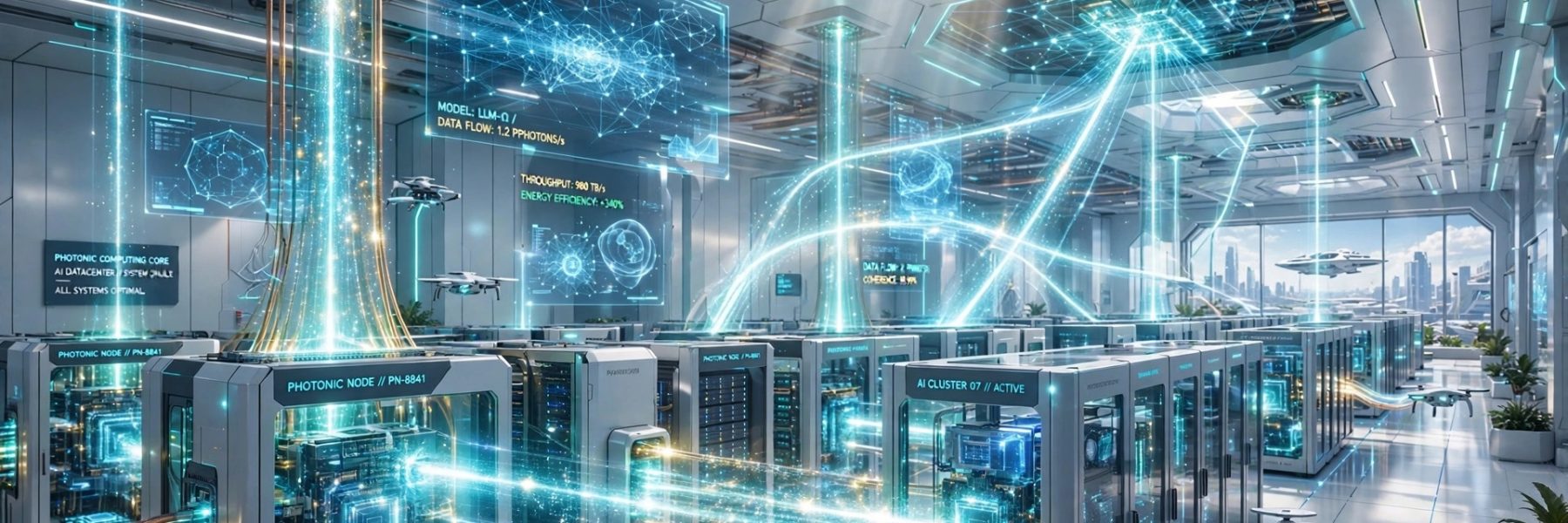
Photonic Computing & Optical NPUs: The Light-Powered Revolution That Could Cool the AI Data Center

The Light-Powered Revolution That May End GPU Overheating
Coordenado por Prof. Aecio D’Silva, Ph.D.
A clear, general-audience guide to how light-based processors work, who is building them, why they matter for AI, and how close they are to mainstream deployment.
SEO keywords: photonic computing, optical NPU, photonic AI accelerator, silicon photonics, AI data center cooling, GPU overheating, optical interconnect, light-based computing, AI inference chips, data center energy efficiency.

Meta description: Discover how photonic computing and optical NPUs use light to accelerate AI, reduce chip heat, improve data-center efficiency, and reshape the future beyond traditional GPUs.

Executive Summary

Photonic computing uses light—not just electricity—to move and process information. Optical neural processing units, or optical NPUs, are designed to accelerate the math behind artificial intelligence by sending photons through tiny on-chip waveguides, interferometers, modulators, and detectors. The value is easy to understand: more AI throughput, less electrical resistance, lower heat, and potentially much better energy efficiency for inference-heavy workloads. This technology will not replace GPUs overnight. However, it could become one of the most important upgrades for AI data centers as power use, cooling, and chip-to-chip bandwidth become major limits on AI growth.

Read more

Thermal Batteries for AI Data Centers

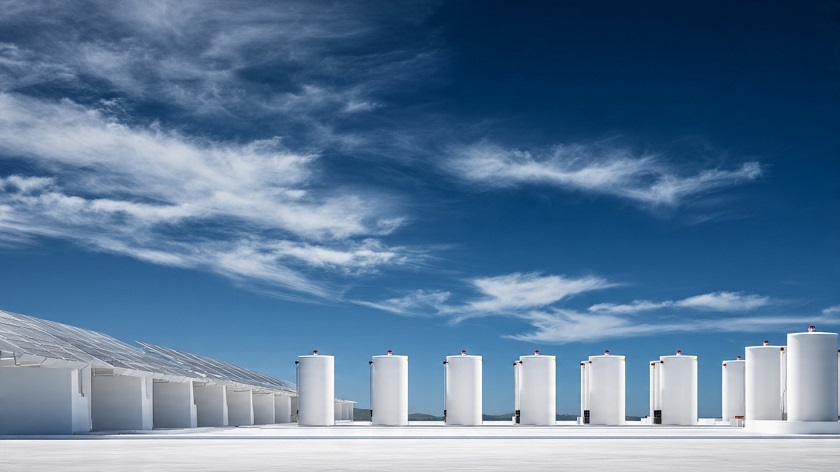
Thermal Batteries for AI Data Centers: How Next-Generation Cooling Could Cut Electricity Use by Up to 86%
**Prof. Aecio D’Silva, Ph.D.

Keywords: thermal batteries, AI data center cooling, data center energy efficiency, zeolite thermal battery, aquifer thermal energy storage, phase change materials, thermal energy storage, liquid cooling, sustainable data centers, cooling electricity reduction

Executive Summary

AI data centers are entering a new thermal-design regime in which rack-level heat flux, coolant supply temperature, chiller lift, and grid-interconnection constraints increasingly determine compute scalability. As accelerator-dense racks approach and exceed 100 kW, thermal management must be treated as a coupled energy-storage, heat-rejection, and workload-orchestration problem rather than a conventional HVAC load. Thermal batteries—thermal energy storage systems that charge by storing sensible, latent, or sorption potential and discharge by absorbing server heat—can shift cooling load from peak grid hours, reduce compressor runtime, improve power usage effectiveness (PUE), and provide short- to long-duration thermal ride-through. Recent zeolite-based sorption models suggest cooling-electricity reductions of up to 86% for the data center cooling subsystem under specified benchmark assumptions, while aquifer thermal energy storage (ATES), borehole thermal energy storage (BTES), ice storage, chilled-water tanks, and phase-change materials (PCMs) offer different tradeoffs in storage duration, round-trip efficiency, water use, site constraints, and dispatchability.

Lower cooling electricity use: Thermal storage can reduce chiller runtime and, in emerging zeolite systems, may cut cooling power consumption dramatically.
Reduced peak demand: Stored cooling can be discharged during high-load periods, helping operators avoid expensive peak electricity charges.
Improved grid flexibility: Data centers can shift cooling loads to hours when renewable power is cheaper, cleaner, or more abundant.
Greater resilience: Thermal buffers give operators more time and flexibility during workload spikes, grid constraints, or cooling system stress.
Better sustainability profile: By lowering electricity demand and supporting renewable integration, thermal batteries can help reduce the carbon intensity of AI infrastructure.

Read more