
AI can amplify intelligence—but only when humans keep ownership of the question, the evidence, and the final judgment.
By Prof. Aecio D’Silva, PhD ·
Artificial Intelligence & Critical Thinking
SUSTAINABLE TECHNOLOGIES
You ask AI to write, and it writes. You ask it to think, and it proposes an argument. You ask it to decide, and it ranks the options. At first, this feels like pure efficiency. The danger begins when assistance becomes substitution: you stop framing the problem, testing the evidence, or explaining why the final answer deserves your name.
That pattern is called cognitive offloading. It is not automatically harmful. Notes, calendars, calculators, maps, and search engines all reduce mental effort. The real question is whether the tool frees your mind for higher-order thinking—or quietly replaces the thinking you needed to practice.
The goal is not to use less AI. It is to preserve more human agency while using it.
What cognitive offloading really means
Psychologists Evan Risko and Sam Gilbert define cognitive offloading as using physical action or external tools to reduce the information-processing demands of a task. Offloading can improve performance when it helps us overcome limited attention or working memory. The problem is not the external aid; it is the loss of deliberate engagement.
Generative AI raises the stakes because it can offload more than memory. It can generate explanations, arguments, plans, summaries, interpretations, and polished prose. If you accept those products without reconstructing the reasoning, you may gain a document while losing an opportunity to learn. Over time, that habit can weaken your ability to start from a blank page, tolerate uncertainty, compare competing claims, and defend a judgment.
Cognitive debt is a useful metaphor for this trade-off. AI produces immediate savings in effort, but unexamined dependence may create a later cost: weaker recall, reduced ownership, shallow understanding, and difficulty performing independently.
Cognitive offloading becomes risky when convenience replaces active evaluation and authorship.

What the research actually shows
1. The MIT Media Lab essay-writing study
A 2025 MIT Media Lab preprint followed 54 participants assigned to write essays using an LLM, a search engine, or no external tool. EEG measurements showed the strongest and most distributed connectivity in the brain-only group, intermediate engagement in the search group, and the weakest connectivity in the LLM group. The LLM group also reported less ownership and had more difficulty quoting its own essays.
These results are provocative, not final proof that AI “destroys intelligence.” The study was a preprint, used a limited sample, focused on one writing task, and should not be generalized to every model, profession, or use case. Its strongest lesson is narrower: when AI supplies too much of the composition process, users may engage less deeply with the material.
2. The 666-participant critical-thinking study
Michael Gerlich’s 2025 mixed-method study surveyed and interviewed 666 participants. It reported a negative association between frequent AI-tool use and critical-thinking scores, with cognitive offloading acting as a mediator. Younger participants showed greater dependence and lower scores than older participants, while education was associated with stronger critical thinking.
Because the research is correlational, it cannot prove that AI use alone caused lower critical thinking. People who already avoid effortful analysis may also be more inclined to delegate. Still, the pattern supports a practical warning: convenience without reflection can become a habit of non-engagement.
3. The Google effect on memory
Long before generative AI, Sparrow, Liu, and Wegner demonstrated that people expecting future access to information remembered less of the information itself and more about where to find it. This “Google effect” shows that external memory changes what we encode. Generative AI extends the issue from retrieval to synthesis: users may remember neither the source nor the reasoning if the system performs both.
Productive struggle—attempting the problem before asking AI—helps preserve comprehension and judgment.

The three forms of intelligence most at risk
Analytical intelligence
Analysis requires decomposing a problem, identifying assumptions, weighing evidence, and tracing consequences. If AI performs that sequence before you attempt it, you receive conclusions without building the mental map that produced them.
Creative intelligence
Creativity depends on incubation, constraint, experimentation, and revision. Instant lists of ten ideas can be useful, but they can also anchor you to predictable patterns. A better protocol is to generate your own rough options first, then use AI to challenge or recombine them.
Authorship is more than producing fluent sentences. It means being able to say: “This is the claim I endorse, these are the reasons, these are the limitations, and this is the risk I accept.” When AI chooses the thesis, evidence, tone, and conclusion, the human may become an approver rather than an author.
The EXPERT framework: use AI without surrendering your mind
Quitting AI is neither realistic nor necessary. What matters is a protocol that keeps the human in the cognitive loop.
E — Essay first
Before prompting, write a raw thesis, three supporting points, and one counterargument. Your draft can be messy. The purpose is to create an intellectual position before the model creates an anchor. Then invite AI to test structure, clarity, and omissions—not to invent your beliefs.
X — X-ray the sources
Ask: Where did this claim come from? What evidence would falsify it? What perspective is missing? Require sources, open the originals, and manually verify at least the most important claim. Never confuse a plausible citation with a verified one.
P — Protected two-lane time
Borrow the logic of the University of Sydney’s two-lane approach. Maintain a secure lane for demonstrating independent competence and an open lane for learning with relevant tools. In personal practice, schedule at least one protected session each week for reading, planning, calculation, or writing without AI.
E — Edit like a professor
Do not stop at grammar. Interrogate the reasoning: “Which premise is weakest?” “What would a skeptical expert challenge?” “Give me the strongest counterexample.” “What conclusion does the evidence not justify?” Editing should deepen thought, not merely smooth prose.
After an AI-assisted deliverable, write three lines: What did I decide differently from the model? Which risk or trade-off did I accept? What did I learn that I did not know before? This creates an audit trail of human judgment and turns production into reflection.
T — Test solo
Once a week, complete a 25-minute “solo flight”: solve a hard domain problem, outline an article, explain a concept, or critique an argument without AI. Then compare your work with AI assistance. This is cognitive weight training—and an honest test of whether the tool is amplifying competence or concealing its absence.
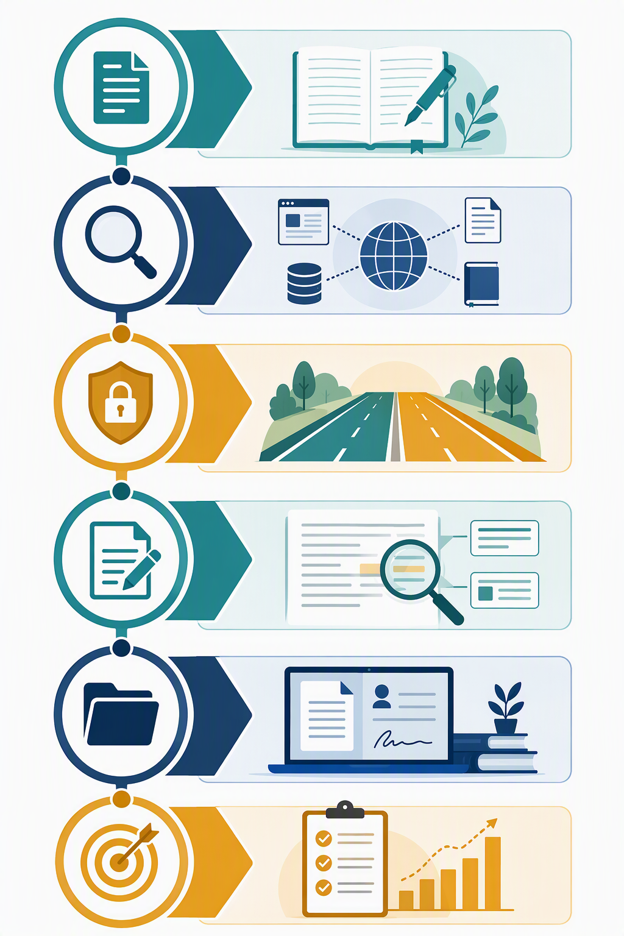
The EXPERT framework keeps human reasoning before, during, and after AI assistance.
A practical daily workflow
- Define: State the problem and desired outcome in your own words.
- Attempt: Produce a rough answer, outline, calculation, or decision criteria.
- Consult: Ask AI for alternatives, objections, gaps, or clearer expression.
- Verify: Check primary sources, numbers, quotations, and assumptions.
- Decide: Select the final position and document why you chose it.
- Rehearse: Explain the result without looking at the AI transcript.
Regular “solo flights” reveal whether AI is strengthening your competence or masking a gap.

Conclusion: amplifier, not amputator
The difference between cognitive atrophy and cognitive amplification is not simply the tool. It is the sequence of use. If AI thinks first, frames the evidence, chooses the interpretation, and writes the conclusion, your role contracts. If you think first, ask AI to challenge you, verify the output, and retain final judgment, your role expands.
Use AI every day if it serves your work—but protect the human capacities that make the work worth doing: curiosity, memory, disciplined doubt, creativity, moral responsibility, and the courage to own a decision.
The essential question is not “Will AI replace me?” It is “What am I practicing today that AI should never practice for me?”
The strongest model is partnership: human purpose and judgment, supported—not replaced—by AI.
Verified references
- Risko, E. F., & Gilbert, S. J. (2016). “Cognitive Offloading.” Trends in Cognitive Sciences, 20(9), 676–688.
- Kosmyna, N., et al. (2025). “Your Brain on ChatGPT: Accumulation of Cognitive Debt when Using an AI Assistant for Essay Writing Task.” MIT Media Lab / arXiv preprint.
- Gerlich, M. (2025). “AI Tools in Society: Impacts on Cognitive Offloading and the Future of Critical Thinking.” Societies, 15(1), 6.
- Sparrow, B., Liu, J., & Wegner, D. M. (2011). “Google Effects on Memory: Cognitive Consequences of Having Information at Our Fingertips.” Science, 333(6043), 776–778.
- Bridgeman, A., Liu, D., & Weeks, R. (2024). “Program level assessment design and the two-lane approach.” Teaching@Sydney.